The $25 vs $400 question
A healthy 30-year-old can buy $500,000 of life insurance for roughly $20–$30 a month. The same person, buying the same $500,000 as whole life insurance, pays roughly $350–$500 a month.
Same coverage amount. Same person. A 10–15x price gap.
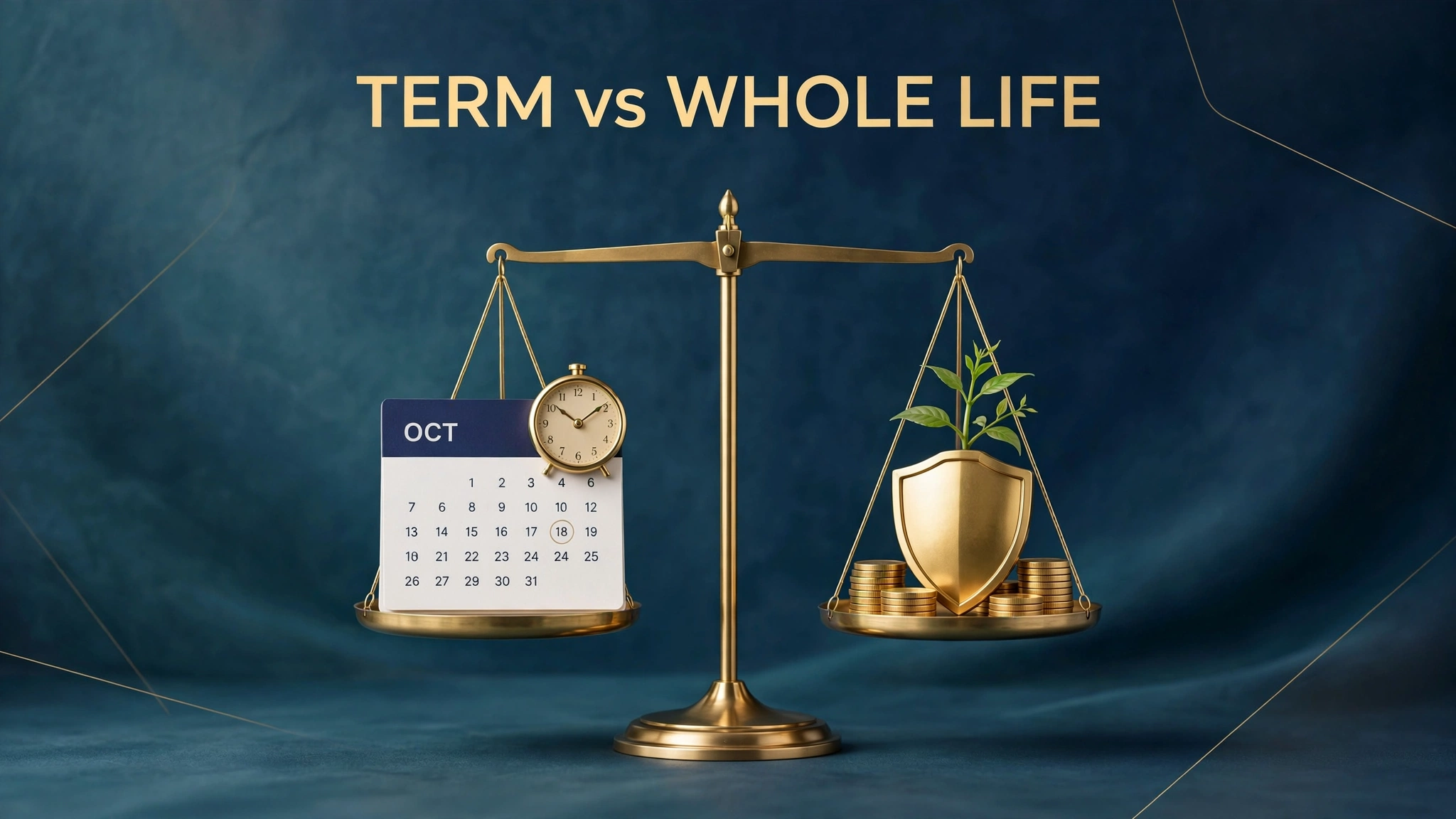
That gap is the whole story of term vs whole life insurance — and most people choose wrong because nobody explains what the extra money actually buys. This guide does that, in plain English, with 2026 prices.
All prices in this article are typical market ranges for healthy non-smokers, not quotes. Your real premium depends on your age, health, smoking status, and the insurer. Always compare quotes from several carriers before you buy.
What is term life insurance?
Term life insurance covers you for a fixed period — usually 10, 20, or 30 years. If you die during that term, your family gets the payout. If you outlive the term, the coverage ends and you get nothing back.
That sounds harsh, but it is exactly why it is so cheap: you are buying pure protection, nothing else.
Term life is best when:
- You have young children or a mortgage to protect
- You need a large amount of coverage on a normal budget
- Your need for insurance will shrink over time (kids grow up, mortgage gets paid off)
A 20-year term bought at 30 covers you until 50 — the years when your family depends on your income most.

What is whole life insurance?
Whole life insurance covers you for your entire life, as long as you keep paying. It costs far more because it does two jobs at once: it pays a death benefit whenever you die, and it builds cash value — a savings component inside the policy that grows slowly over time.
You can borrow against that cash value, and some policies pay dividends. But the cash value grows slowly in the early years, and much of your early premiums go to fees and commissions.
Whole life is best when:
- Someone will depend on you financially for your whole life (for example, a child with a disability)
- You need life insurance as part of estate planning
- You specifically want a guaranteed cash value you can borrow against later
What does it cost in 2026?
Typical monthly premiums for $500,000 of coverage, healthy non-smoker, 20-year term vs whole life:
| Age | Term life (20-year) | Whole life |
|---|---|---|
| 30 | ~$20–$30/month | ~$350–$500/month |
| 40 | ~$30–$55/month | ~$500–$800/month |
| 50 | ~$60–$100/month | ~$850–$1,300/month |
Three things jump out:
- Age is the biggest cost driver. The same policy costs 3–4x more at 50 than at 30. Buying young locks in the low rate.
- Smokers pay 2–3x more than non-smokers at every age.
- Women pay 10–25% less than men for identical coverage, because of longer average life expectancy.
Term vs whole life: side-by-side
| Feature | Term life | Whole life |
|---|---|---|
| How long it lasts | 10, 20, or 30 years | Your entire life |
| Monthly cost ($500K, age 30) | ~$20–$30 | ~$350–$500 |
| Cash value | None | Yes, grows slowly |
| Premiums | Fixed during the term | Fixed for life |
| Can you borrow against it? | No | Yes, against cash value |
| Best for | Most families, income protection | Lifelong dependents, estate planning |
| What happens if you stop paying? | Coverage ends | Policy may lapse (or use cash value to keep going) |
How much coverage do you actually need?
The rule of thumb most advisors use is 10–12x your annual income. Earn $60,000 a year? That means roughly $600,000–$720,000 of coverage.
Then adjust for your real life:
- Add your mortgage balance and any other debts
- Add future college costs if you have kids
- Subtract savings and investments your family could use
- Subtract any coverage you already have through work
Most people are underinsured, not overinsured. A $250,000 policy sounds like a lot until you divide it by 20 years of lost income.
Which one should you buy?
Buy term life if you are like most people: you need a lot of protection while your kids are young and your mortgage is big, and you want the lowest possible monthly cost. Take the money you save versus whole life and put it toward paying off debt or investing — that usually builds wealth faster than a policy’s cash value.
Buy whole life if you have a specific lifelong need: a dependent who will never be financially independent, a large estate with tax issues, or a final-expenses need nobody else will cover. It is a specialist tool, not a default.
A common middle path: buy a 20- or 30-year term policy now, and if your situation later needs permanent coverage, convert part of it — many term policies let you convert to whole life without a new medical exam.
3 mistakes that turn a $30/month decision into a $300/month one
1. Buying whole life because an agent said it is an “investment.” Whole life is insurance with a slow savings account attached. It is not an investment plan, and the returns are modest once fees are counted.
2. Waiting until you are older or sicker. Every year you wait, premiums rise — and a health problem can make you uninsurable or push you into a much higher rate class.
3. Buying too little coverage. A policy that replaces only one year of income does not protect your family. Use the 10–12x rule as a floor, not a ceiling.
FAQ
Is term life insurance a waste of money if I outlive it?
No. You paid for protection during the years your family needed it most — the same way car insurance is not wasted if you never crash. If you outlive the term, it usually means your kids are grown and your mortgage is smaller, so you need less coverage anyway.
Can I convert term life to whole life later?
Many term policies include a conversion option that lets you switch to permanent coverage without a new medical exam, usually within a set time window. Check before you buy.
Does whole life insurance build cash value I can actually use?
Yes, but slowly. In the first years, most of your premium goes to costs, not savings. Borrowing against cash value also reduces the death benefit if the loan is not repaid.
How many quotes should I compare?
At least 3–5 from different carriers. The same healthy 30-year-old can get noticeably different prices from different insurers.
Do I need life insurance if I am single with no kids?
Probably not much — unless someone co-signed your debts or depends on you. If you plan to have a family, buying a small term policy young still locks in the cheapest rate of your life.
The bottom line
For most families, term life wins: the same $500,000 of protection for roughly $25 a month instead of roughly $400. Whole life has real uses, but they are specific — lifelong dependents and estate planning — not “everyone should have it.”
Buy the coverage your family actually needs, buy it while you are young and healthy, and compare quotes before you commit.
If you are sorting out the rest of your family finances too, read our Personal Loan Requirements 2026 guide before you borrow, and our credit card interest guide to see what high-interest debt really costs.
Disclaimer: This article is educational only and is not insurance or financial advice. Premium figures are typical 2026 market ranges for healthy applicants, not quotes. Talk to a licensed independent agent about your own situation.