The short answer
A bathroom remodel in the US in 2026 costs $3,000 to $30,000 for most projects, with a national average around $12,000–$16,500 for a mid-range full bathroom. A luxury gut renovation can reach $80,000 or more. Where you land in that range depends on three things: the size of the bathroom, the scope of the work, and the finishes you choose.
All prices here are typical 2026 US national ranges from contractor and remodeling-industry data (Modernize, HomeAdvisor, Remodeling Magazine’s Cost vs. Value Report), not quotes. Your real cost depends on your city, your bathroom’s condition, and your contractor. Always get 3 quotes before you commit.
Cost by scope
- Cosmetic refresh: $3,000–$8,000 — Paint, fixtures, mirror, lighting — same layout, no tile work.
- Mid-range full remodel: $10,000–$25,000 — New tile, vanity, toilet, shower/tub, fixtures, lighting.
- Upscale remodel: $25,000–$40,000+ — Custom tile, premium fixtures, frameless glass, heated floors.
- Luxury / gut renovation: $30,000–$80,000+ — Layout changes, moving plumbing, expanding the room.
Per square foot, expect roughly $80–$120 for budget work, $180–$280 for mid-range, and $300–$800+ for luxury finishes. Labor is the biggest line — typically 40–65% of the total — and moving plumbing is the single most expensive decision you can make. Keep the toilet, sink and shower where they are and you save thousands.
What a moody vintage / 1920s-style bathroom adds to the bill
Retro bathrooms are trending hard in 2026 — moody vintage bathrooms with deep green walls and brass fixtures, and the 1920s bathroom original look with penny tile and clawfoot tubs. The style is beautiful, but some of its signature pieces cost more than modern equivalents:
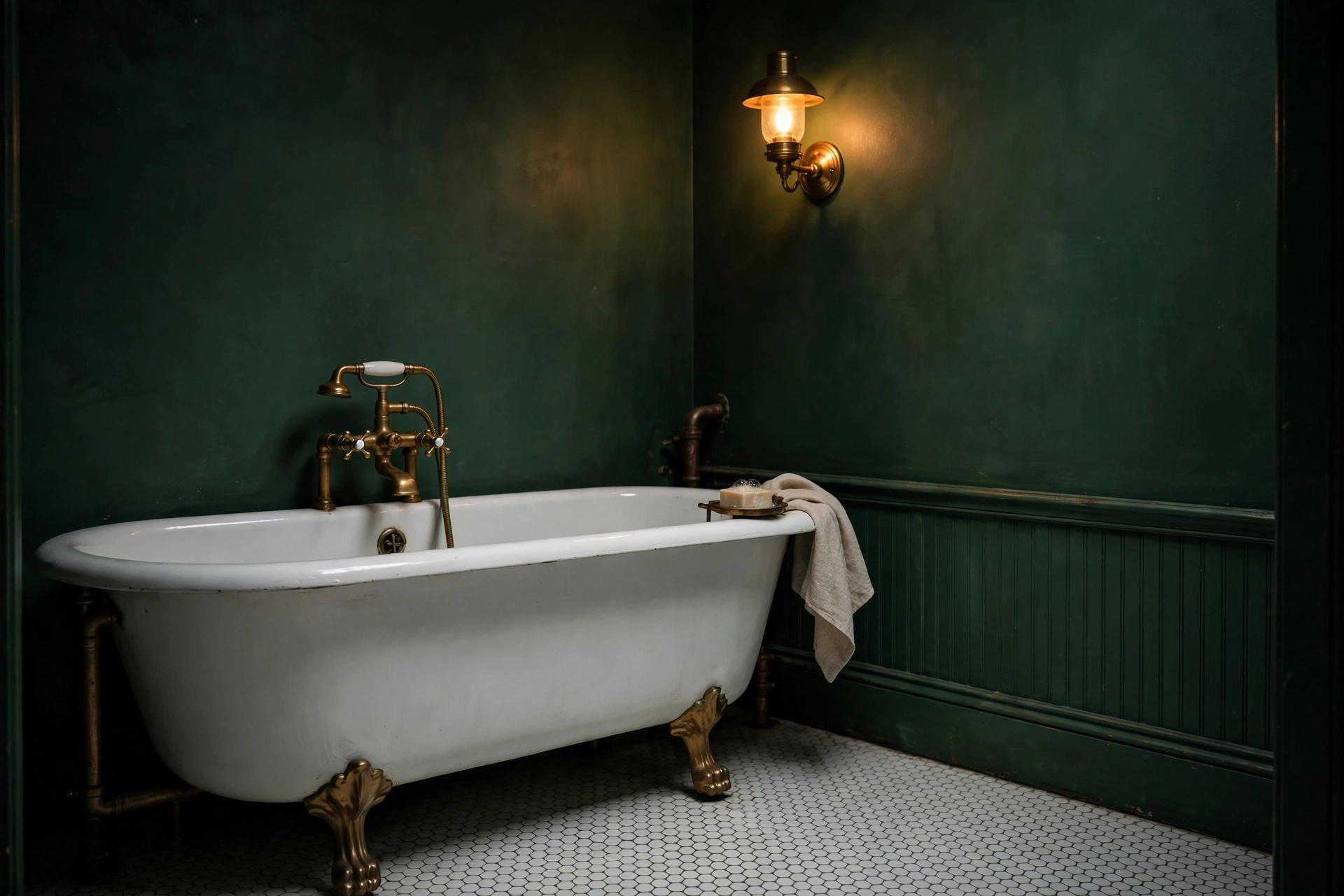
- Clawfoot tub: $1,500–$5,000+ for the tub alone (vs $500–$1,500 for a standard alcove tub), plus pricier plumbing.
- Penny tile / handmade-look tile: $10–$30 per sq ft installed, vs $5–$12 for standard ceramic.
- Colored fixtures (pink, green, navy): vintage-color tubs, sinks and toilets run 20–50% more than white, and fewer suppliers stock them.
- Brass fixtures: $150–$400 per faucet vs $50–$150 for chrome.
The budget-friendly way to get the look: keep the layout and the tub, spend on paint (deep green is cheap), a brass faucet set, and a checkerboard or penny-tile accent wall instead of tiling the whole room. You get the moody vintage feel for a cosmetic-refresh price.
Where the money goes (mid-range remodel)
| Labor | 40–65% |
| Tile + flooring | 10–15% |
| Vanity + countertop | 10–15% |
| Shower / tub | 10–15% |
| Fixtures + lighting | 5–10% |
| Toilet | 3–5% |
Is it worth it? The resale question
A mid-range bathroom remodel recoups roughly 68% of its cost at resale, according to Remodeling Magazine’s Cost vs. Value Report — one of the better returns of any home project. That means a $16,000 remodel adds about $11,000 to your home’s value. You don’t remodel a bathroom to make money; you remodel it to enjoy it, and the resale return softens the cost.
How to pay for it
Most people don’t pay cash for a $16,000 remodel. The common routes:
- Home equity loan or HELOC: usually the cheapest borrowing, since your home secures it — but your home is at risk if you can’t pay.
- Personal loan: faster, no collateral, but higher rates. Before you apply, read our Personal Loan Requirements 2026 guide — lenders check your credit score, income and existing debts first.
- Credit card: only for small pieces of the project. At 20%+ interest, card debt gets expensive fast — see what credit card interest really costs before you put a remodel on a card.
- Save first, remodel later: the cheapest option of all is waiting until you can pay cash for at least the cosmetic part.
3 budget mistakes to avoid
- No contingency fund. Old bathrooms hide problems — rotten subfloors, old plumbing, mold. Keep 10–20% of the budget unspent for surprises.
- Moving the plumbing. Relocating a toilet or shower can add $2,000–$5,000 by itself. Design around the existing layout.
- Buying the cheapest everything. Budget fixtures that fail in two years cost more than mid-range ones that last fifteen. Spend on what gets touched daily (faucets, shower valve) and save on what doesn’t (paint, accessories).
FAQ
What does $5,000 actually buy?
A cosmetic refresh: paint, a new mirror and lighting, a faucet set, and maybe a new toilet — same layout, same tile.
What does $10,000 buy?
A small full remodel: new vanity, toilet, fixtures and flooring in a standard 5×7 bathroom, keeping the tub and the layout.
How long does a remodel take?
A cosmetic refresh takes 1–2 weeks. A mid-range full remodel takes 3–5 weeks. A luxury gut renovation takes 8–12 weeks.
Does a bathroom remodel need a permit?
Usually yes for plumbing, electrical or layout changes. Cosmetic work (paint, fixtures) usually doesn’t. Check your city’s rules — unpermitted work can hurt a future sale.
The bottom line
Budget $12,000–$16,500 for a typical mid-range bathroom remodel in 2026, keep 10–20% aside for surprises, and don’t move the plumbing unless you have to. If you love the moody vintage 1920s look, spend on paint and brass and save on tile — the style is mostly color and fixtures, not a gut renovation.
Disclaimer: This article is educational only and is not financial advice. Cost figures are 2026 US national averages from remodeling-industry sources, not quotes. Get local quotes and talk to a licensed contractor and a financial advisor about your own situation.