
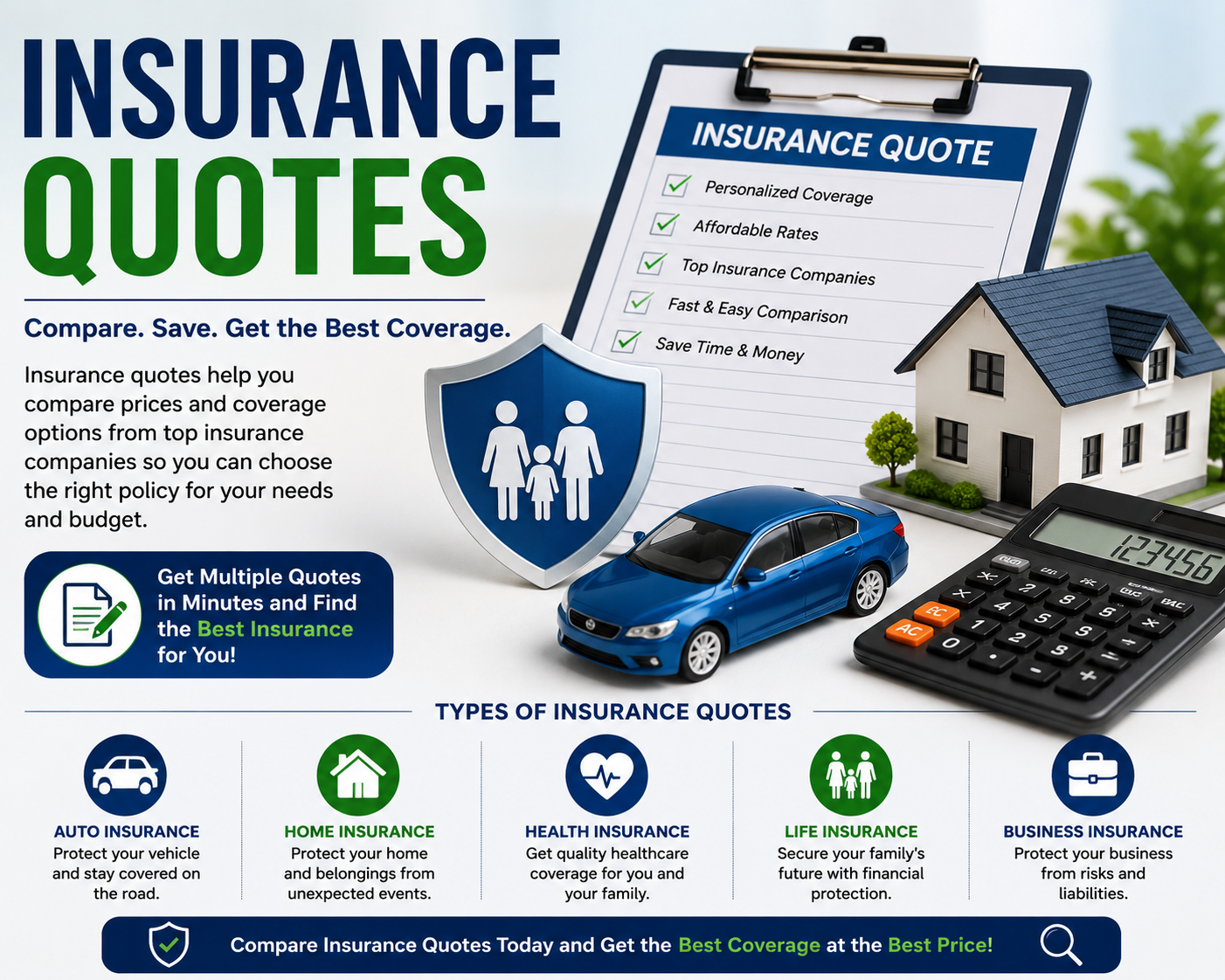
🛡️ Insurance Quotes: How to Compare Coverage, Rates, and Find the Right Policy
Insurance quotes can help you understand how much you may pay for financial protection against unexpected events. Whether you are looking for car insurance quotes, home insurance quotes, life insurance quotes, health insurance quotes, or business insurance quotes, comparing available options can help you better understand coverage and costs.
The price of insurance is not always the most important factor. A lower-priced policy may provide less coverage, have a higher deductible, or include limitations that could affect you when you need to make a claim.
For this reason, comparing insurance quotes should involve more than simply choosing the cheapest option.
This guide explains what insurance quotes are, how they work, what affects insurance rates, and how to compare policies more effectively.
💡 Important: Insurance prices, coverage, eligibility, and policy terms vary by insurer, location, personal circumstances, and the type of insurance. Always review the complete policy details before purchasing coverage.
Table of Contents
📋 What Are Insurance Quotes?
An insurance quote is an estimate of the price you may pay for an insurance policy based on the information provided to an insurance company or insurance agent.
The quote may include details about the estimated premium, coverage options, deductibles, policy limits, and additional features available with the insurance policy.
Insurance companies use different methods to calculate risk. As a result, two companies may provide different insurance quotes for similar types of coverage.
The final price may also change if additional information is reviewed before the policy is issued.
🔍 Information Used to Create an Insurance Quote:
- 👤 Personal or business information: Insurance providers may request information about the person, family, property, vehicle, or business that needs coverage. The type of information requested depends on the insurance product and applicable laws.
- 📍 Location: Where you live, own property, drive, or operate a business can influence insurance pricing. Local risks, regulations, weather conditions, accident rates, and other factors may affect the quote.
- 🛡️ Coverage requirements: Higher policy limits or broader coverage may increase the cost of insurance. Lower coverage levels may reduce the premium but could also leave you with greater financial responsibility.
- 💰 Deductible amount: Choosing a higher deductible may reduce your premium in some cases. However, it can also mean paying more from your own funds before certain insurance benefits apply.
- 📊 Risk factors: Depending on the insurance type and local regulations, insurers may evaluate relevant risk factors when calculating a quote.
Understanding how these factors affect your quote can make it easier to compare insurance policies.
🚗 Types of Insurance Quotes
Different insurance products protect against different financial risks. Before requesting a quote, it is helpful to understand what type of coverage you need.
🚘 Auto Insurance Quotes
Auto insurance quotes provide an estimate of the cost of insuring a vehicle.
Depending on your location and policy, coverage may include liability protection, collision coverage, comprehensive coverage, uninsured or underinsured motorist protection, and other optional benefits.
When comparing auto insurance quotes, do not compare only the monthly premium. Review the coverage limits, deductibles, exclusions, and available services.
A cheaper auto insurance quote may not offer the same level of protection as a more expensive policy.
🏠 Home Insurance Quotes
Home insurance quotes estimate the potential cost of protecting a home and, depending on the policy, certain personal belongings and liability risks.
Coverage may include damage caused by specific events such as fire, storms, theft, or other covered risks.
However, policies can contain exclusions and limitations.
When comparing homeowners insurance quotes, consider the rebuilding cost of the property, deductible, coverage limits, personal property protection, and any additional coverage requirements.
Homeowners should carefully review whether specific risks are covered or require separate insurance.
❤️ Life Insurance Quotes
Life insurance quotes estimate the cost of a policy designed to provide a financial benefit to eligible beneficiaries after the death of the insured person, subject to policy terms.
Common types of life insurance include term life insurance and permanent life insurance.
The cost may depend on factors such as the applicant’s age, the amount of coverage requested, policy type, and other legally permitted underwriting factors.
When comparing life insurance quotes, consider how much financial protection your family may need and how long you expect to require coverage.
🏥 Health Insurance Quotes
Health insurance quotes provide an estimate of the potential cost of healthcare coverage.
Depending on the plan and location, health insurance may help with eligible expenses related to doctor visits, hospital care, emergency treatment, prescription medication, preventive services, and other healthcare needs.
When comparing health insurance quotes, review the monthly premium, deductible, copayments, coinsurance, provider network, prescription drug coverage, and applicable out-of-pocket costs.
The cheapest health insurance quote may not always provide the most suitable coverage.
🏢 Business Insurance Quotes
Business insurance quotes estimate the cost of protecting a business against specific financial risks.
Depending on the policy, business coverage may include general liability, commercial property protection, professional liability, workers’ compensation where applicable, cyber coverage, and other insurance products.
Every business has different risks.
A small online business may need very different protection compared with a construction company, retail store, or professional services firm.
Comparing business insurance quotes can help business owners understand available coverage options and potential costs.
⚙️ How Do Insurance Quotes Work?
Insurance quotes are generally created after an insurance provider receives information about the person, property, vehicle, business, or other item requiring coverage.
The insurance company uses its pricing and underwriting methods to estimate the level of risk and calculate a potential premium.
The quote may include multiple coverage options.
For example, you may be able to select different deductibles, policy limits, optional benefits, or coverage levels.
Changing these options can change the estimated price.
An insurance quote is not always a final contract or guarantee of coverage. The insurer may verify information and review eligibility before issuing a policy.
Because quotes can change, it is important to review the final policy documents carefully before purchasing insurance.
💰 What Factors Affect Insurance Quotes?
Insurance rates can vary significantly between individuals and policies.
📍 Your Location
Where you live or where the insured property is located can influence insurance pricing.
For example, local weather risks, population density, crime statistics, traffic conditions, property values, and regional regulations may affect the cost of coverage.
Two people purchasing similar insurance may receive different quotes simply because they live in different locations.
For this reason, national average prices should only be used as general information.
Your actual quote may be different.
🛡️ Type and Amount of Coverage
The level of protection you choose can have a major effect on your insurance quote.
Higher coverage limits may increase the premium because the insurance company could potentially pay a larger amount for a covered claim.
Lower limits may reduce the premium but could provide less financial protection.
The goal should be to find an appropriate balance between affordability and adequate coverage.
💵 Deductible
The deductible is an amount you may be required to pay before the insurance company contributes toward certain covered losses.
A higher deductible can sometimes reduce the insurance premium.
However, choosing a high deductible means you should be financially prepared to pay that amount if you need to make a claim.
Do not choose a deductible based only on the potential savings.
Consider your emergency savings and financial situation.
📊 Claims and Insurance History
For some types of insurance, previous claims or insurance history may influence the quote, subject to local laws and insurance regulations.
A history of frequent claims may affect how an insurer evaluates risk.
However, insurance companies use different underwriting methods, so the impact can vary.
Comparing multiple insurance quotes may help you identify different pricing structures.
👤 Personal Risk Factors
Depending on the insurance product and applicable regulations, insurance providers may consider legally permitted personal or risk-related factors.
For example, auto insurance may consider driving-related information, while life insurance may use underwriting information permitted by law.
The factors used are not the same for every type of insurance.
Always provide accurate information when requesting a quote because incorrect information could affect the final policy or claim.
🔎 How to Compare Insurance Quotes
Comparing insurance quotes correctly requires looking beyond the advertised price.
1️⃣ Compare the Same Coverage
When comparing multiple quotes, make sure you are reviewing similar coverage levels.
A policy with a lower premium may simply provide lower coverage limits or fewer benefits.
Compare deductibles, coverage limits, exclusions, optional features, and policy conditions.
This creates a more accurate comparison.
2️⃣ Check the Deductible
A lower premium can sometimes be connected to a higher deductible.
Consider how much you would need to pay yourself if you made a claim.
A deductible should fit your financial situation.
Choosing an amount that is difficult to afford could create financial problems during an emergency.
3️⃣ Review Coverage Limits
Coverage limits determine the maximum amount the insurer may pay for a covered loss, subject to the policy terms.
Low limits may reduce the insurance premium.
However, they may also provide insufficient protection during a major claim.
Compare the policy limits carefully before choosing insurance.
4️⃣ Read Policy Exclusions
Every insurance policy may include exclusions or situations that are not covered.
For example, some risks may require additional coverage or a separate policy.
Reading the exclusions is important because it helps you understand the limitations of your insurance.
Never assume that a policy covers every possible event.
5️⃣ Consider Customer Service and Claims Support
Price is important, but the quality of customer service and claims support can also matter.
A policy may be inexpensive, but difficulties during the claims process can create additional stress.
Researching an insurer’s reputation and available support options can help you make a more informed decision.
💡 How to Get Affordable Insurance Quotes
Finding affordable insurance does not necessarily mean finding the cheapest policy.
The goal should be to find suitable coverage at a price that fits your budget.
🔄 Compare Multiple Insurance Providers
Insurance companies use different pricing systems.
Requesting quotes from multiple providers can help you identify differences in premiums and coverage.
Always compare similar coverage levels.
Otherwise, a cheaper quote may not represent better value.
📦 Consider Bundling Eligible Policies
Some insurance providers may offer discounts when customers purchase more than one type of insurance.
For example, eligible customers may combine auto and home insurance policies.
Discount availability and eligibility requirements vary.
Always compare the total cost and coverage before choosing a bundled package.
🛡️ Choose a Suitable Deductible
A higher deductible may reduce the premium in some cases.
However, the deductible should remain affordable.
The best choice depends on your savings, financial stability, and ability to handle unexpected expenses.
📝 Review Your Coverage Regularly
Your insurance needs can change over time.
Buying a home, getting married, starting a business, purchasing a new vehicle, or making other major life changes may affect your coverage needs.
Reviewing your policies regularly can help ensure that you are not paying for unnecessary coverage or missing important protection.
⚠️ Common Mistakes to Avoid When Comparing Insurance Quotes
Many people focus entirely on finding the lowest price.
This can lead to important coverage differences being overlooked.
❌ Choosing Only the Cheapest Quote
The cheapest insurance quote may not provide sufficient coverage.
Before purchasing a policy, compare coverage limits, deductibles, exclusions, and benefits.
A slightly more expensive policy may provide significantly better financial protection.
❌ Providing Incorrect Information
Providing inaccurate information can result in an incorrect quote.
It may also cause problems when the insurer verifies information or processes a claim.
Always provide accurate and complete details when requesting insurance quotes.
❌ Ignoring Policy Exclusions
Exclusions explain situations, events, or types of losses that may not be covered.
Ignoring these details can result in unexpected financial responsibility.
Review exclusions before purchasing coverage.
❌ Not Comparing Multiple Quotes
Different insurers may calculate risk differently.
Comparing only one quote may mean missing a more suitable policy.
Whenever possible, compare several options using similar coverage requirements.
❌ Forgetting to Review the Policy Before Buying
A quote is only an estimate.
Before purchasing insurance, read the final policy documents and confirm the coverage details.
Check the premium, deductible, coverage limits, exclusions, renewal conditions, and cancellation rules.
Understanding the policy before signing can help prevent misunderstandings later.
📈 Why Comparing Insurance Quotes Is Important
Comparing insurance quotes gives you a better understanding of the insurance market and available coverage options.
It allows you to compare the potential cost of similar policies from different providers.
More importantly, it helps you identify differences in coverage that may not be obvious from the advertised price.
Insurance is designed to provide financial protection when specific covered events occur.
Choosing the right policy requires balancing affordability with the level of protection you need.
Taking extra time to compare quotes, read policy documents, and understand exclusions can potentially prevent expensive mistakes in the future.
🏁 Final Thoughts
Insurance quotes are a useful starting point when searching for financial protection for your vehicle, home, health, life, family, or business.
However, the lowest price is not always the best choice.
A good insurance policy should provide appropriate coverage for your situation while remaining financially manageable.
Before choosing a policy, compare the premium, deductible, coverage limits, exclusions, optional benefits, and available customer support.
Whether you are searching for car insurance quotes, homeowners insurance quotes, health insurance quotes, life insurance quotes, or business insurance quotes, taking the time to compare similar policies can help you make a more informed decision.
The right insurance policy depends on your individual needs, location, budget, and the risks you want to protect against.
❓ Frequently Asked Questions About Insurance Quotes
What is an insurance quote?
An insurance quote is an estimated price for an insurance policy based on the information provided to an insurance company. The final premium and eligibility may change after the insurer reviews and verifies the information.
Are insurance quotes free?
Many insurance providers offer quotes without charging a fee. However, the availability and process can vary depending on the insurer, insurance product, and location.
Why are insurance quotes different between companies?
Insurance companies may use different underwriting methods, risk calculations, pricing models, coverage options, and discount programs. As a result, the same person may receive different quotes from different providers.
How many insurance quotes should I compare?
There is no single required number. Comparing several quotes can provide a better understanding of available prices and coverage options. Make sure the policies being compared offer similar levels of protection.
Does getting an insurance quote affect my credit score?
This depends on the type of insurance, the insurer, your location, and applicable laws. If an insurer uses credit-related information where legally permitted, the type of inquiry and its effect can vary. Ask the insurer about its quoting process if you are concerned.
What information do I need to get an insurance quote?
The information required depends on the type of insurance. You may need to provide details about yourself, your location, the property or vehicle being insured, your desired coverage, and other information relevant to the policy.
Can an insurance quote change?
Yes. A quote may change if the information is updated, additional details are verified, the selected coverage changes, or the insurer’s underwriting review identifies factors that affect pricing or eligibility.
Is the cheapest insurance quote always the best?
No. The cheapest quote may have higher deductibles, lower coverage limits, or additional exclusions. Compare the complete policy rather than focusing only on the premium.
How can I find affordable insurance?
Compare similar policies from multiple providers, review available discounts, choose an appropriate deductible, and regularly reassess your coverage needs. Affordable insurance should still provide a level of protection that is suitable for your financial situation.


