
🎓 Introduction
Higher education continues to be one of the most valuable investments for students across the United States and Europe. Whether your goal is to earn a bachelor’s degree, pursue a master’s program, or obtain professional certifications, education often comes with significant costs. Tuition fees, textbooks, housing, transportation, technology, and daily living expenses can quickly add up.
For many students and families, paying these expenses out of pocket is not always possible. This is where student loans become an essential financial tool. A student loan provides access to educational opportunities by covering academic costs while allowing repayment over time after graduation.
Understanding how student loans work is critical before borrowing money. The right loan can help you achieve your educational goals without creating unnecessary financial stress in the future. This comprehensive guide explains everything students need to know about student loans, including their types, benefits, repayment strategies, and key considerations before applying.
Table of Contents
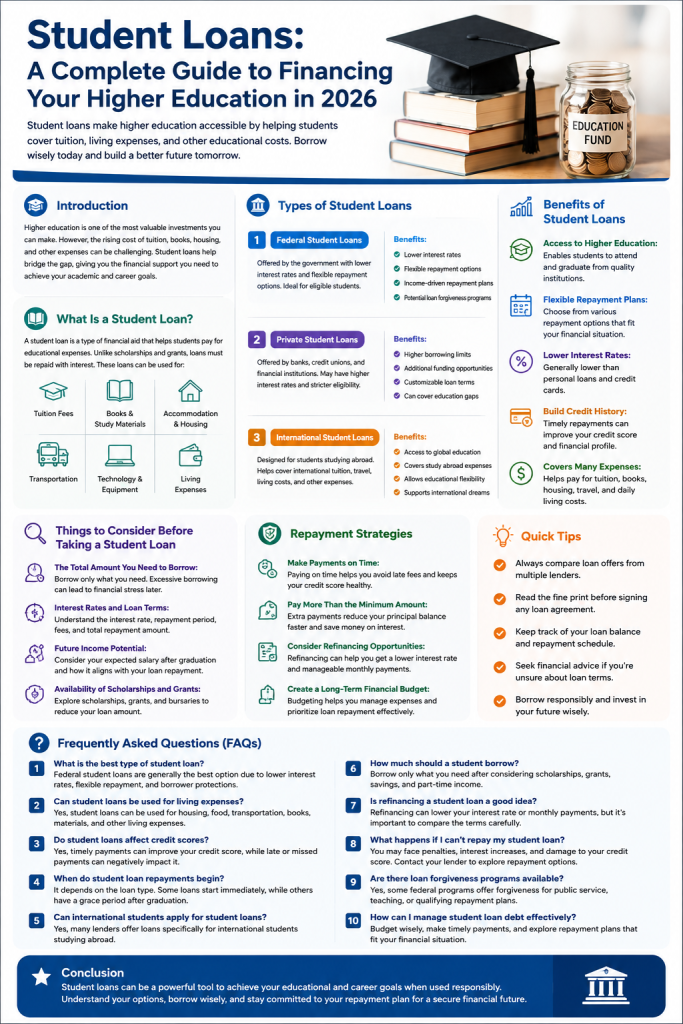
📚 What Is a Student Loan?
A student loan is a specialized financial product designed to help students pay for educational expenses. Unlike scholarships and grants, which generally do not require repayment, student loans must be repaid according to agreed loan terms, often with interest.
Student loans can be used for a wide range of academic expenses, including:
🔹 Tuition fees
🔹 Books and study materials
🔹 Student housing and accommodation
🔹 Transportation expenses
🔹 Technology and equipment required for studies
🔹 Living expenses during academic programs
The purpose of student financing is to remove financial barriers and provide access to quality education regardless of a student’s immediate financial situation.
🏦 Types of Student Loans
🇺🇸 1. Federal Student Loans
Federal student loans are government-supported educational loans designed to help eligible students finance their education.
✅ Benefits of Federal Student Loans:
🔹 Lower Interest Rates:
Federal loans typically offer more competitive interest rates than many private lenders. This makes borrowing more affordable and helps students save money over the life of the loan. Lower rates can significantly reduce long-term repayment costs, making federal loans a preferred option for many borrowers. Fixed interest rates also provide predictable monthly payments, allowing graduates to budget effectively after completing their studies.
🔹 Flexible Repayment Options:
One of the biggest advantages of federal student loans is the availability of flexible repayment plans. Borrowers may choose income-driven repayment options, extended repayment schedules, or standard repayment plans based on their financial circumstances. These options provide financial protection during periods of lower income and reduce the risk of default.
🔹 Potential Loan Forgiveness Programs:
Certain federal programs may offer loan forgiveness opportunities for eligible borrowers working in qualifying public service or educational professions. These programs can reduce or eliminate remaining loan balances after meeting specific requirements, making higher education more accessible for students entering public service careers.
🏛️ 2. Private Student Loans
Private student loans are provided by banks, credit unions, and other financial institutions.
✅ Benefits of Private Student Loans:
🔹 Higher Borrowing Limits:
Private lenders often allow students to borrow larger amounts than federal programs. This can be beneficial for students attending expensive universities or pursuing advanced professional degrees where educational costs exceed federal loan limits.
🔹 Additional Funding Opportunities:
Students who have exhausted federal aid options may use private loans to bridge funding gaps. These loans can cover tuition, housing, technology expenses, and other education-related costs not fully addressed through government assistance programs.
🔹 Customized Loan Terms:
Many private lenders offer different repayment structures and loan products. Students may be able to choose repayment periods and interest rate structures that align with their financial goals and future income expectations.
🌍 3. International Student Loans
International student loans are specifically designed for students studying abroad or attending institutions outside their home country.
✅ Benefits of International Student Loans:
🔹 Access to Global Education:
These loans make it possible for students to attend prestigious international universities without requiring immediate access to substantial financial resources. They support educational mobility and international academic opportunities.
🔹 Coverage of Study Abroad Costs:
International education involves expenses beyond tuition, including travel, visas, accommodation, insurance, and living costs. Specialized student loans help cover these additional financial requirements.
🔹 Greater Educational Flexibility:
Students can pursue educational opportunities that best fit their career ambitions rather than limiting their choices based solely on financial constraints.
💰 Benefits of Student Loans
✅ Access to Higher Education Opportunities:
Student loans help students enroll in colleges and universities that may otherwise be financially inaccessible. By providing immediate funding, these loans allow individuals to focus on academic achievement rather than delaying education due to financial limitations. Access to quality education often leads to improved career opportunities, higher earning potential, and long-term professional growth.
✅ Flexible Repayment Plans:
Many student loan programs offer repayment structures designed to accommodate graduates at different income levels. Flexible repayment options can reduce financial pressure during the early stages of a career and make debt management more sustainable. This flexibility helps borrowers remain financially stable while meeting repayment obligations.
✅ Lower Interest Rates Compared to Many Personal Loans:
Educational loans are often structured with more favorable interest rates than general-purpose borrowing products. Lower rates help minimize borrowing costs and make student financing a more economical solution for educational funding.
✅ Opportunity to Build Credit History:
Responsible loan repayment demonstrates financial reliability and can contribute positively to a borrower’s credit profile. Establishing strong credit may improve eligibility for future financial products such as mortgages, vehicle financing, and business loans.
✅ Coverage for Comprehensive Educational Expenses:
Student loans support more than tuition payments. They can assist with accommodation, transportation, educational supplies, technology purchases, and other essential expenses that contribute to a successful academic experience.
⚠️ Things to Consider Before Taking a Student Loan
🔍 The Total Amount You Need to Borrow:
Students should calculate educational expenses carefully before applying for financing. Borrowing only what is necessary can help reduce future debt burdens and simplify repayment after graduation. Strategic borrowing is an important component of responsible financial planning.
🔍 Interest Rates and Loan Terms:
Understanding how interest rates affect total repayment costs is essential. Even small differences in interest rates can significantly impact the overall amount repaid over the life of a loan. Students should review all loan terms carefully before signing agreements.
🔍 Future Income Potential:
Borrowers should evaluate expected earnings within their chosen profession. Understanding career salary prospects can help determine how manageable future loan repayments will be and support informed borrowing decisions.
🔍 Availability of Scholarships and Grants:
Before taking on debt, students should explore scholarships, grants, tuition assistance programs, and employer-sponsored education benefits. These funding sources can reduce reliance on loans and lower future financial obligations.
📈 Repayment Strategies
✅ Make Payments on Time:
Consistent on-time payments help borrowers avoid penalties, maintain a positive credit history, and reduce financial stress. Timely repayment is one of the most effective ways to manage student debt responsibly.
✅ Pay More Than the Minimum Amount:
Whenever financially possible, making extra payments can reduce principal balances faster. This strategy often decreases total interest costs and shortens the repayment period, helping borrowers become debt-free sooner.
✅ Consider Refinancing Opportunities:
Graduates with strong credit profiles may explore refinancing options to secure lower interest rates. Refinancing can reduce monthly payments or total repayment costs, depending on individual financial goals.
✅ Create a Long-Term Financial Budget:
A structured budget helps borrowers prioritize expenses and allocate sufficient funds toward loan repayment. Financial planning improves debt management and supports long-term financial health.
🎯 Conclusion
Student loans continue to play a vital role in helping students across America and Europe access higher education. While borrowing money for education can create valuable opportunities, it is important to understand the responsibilities associated with student debt.
By evaluating loan options carefully, borrowing only what is necessary, understanding repayment obligations, and maintaining strong financial habits, students can maximize the benefits of educational financing while minimizing long-term financial challenges. Smart borrowing today can pave the way for a successful academic journey and a financially secure future.
❓ Frequently Asked Questions (FAQs)
1. What is the best type of student loan?
Federal student loans are generally considered the best option due to lower interest rates, borrower protections, and flexible repayment plans.
2. Can student loans be used for living expenses?
Yes. Many student loans can cover housing, transportation, food, textbooks, technology, and other education-related living expenses.
3. Do student loans affect credit scores?
Yes. Responsible repayment can improve your credit score, while missed payments may negatively impact your credit history.
4. When do student loan repayments begin?
Repayment schedules vary by lender and loan type. Some loans begin repayment immediately, while others provide a grace period after graduation.
5. Can international students apply for student loans?
Yes. Many lenders offer specialized international student loans for eligible students studying abroad.
6. How much should a student borrow?
Students should borrow only the amount necessary to cover educational expenses after considering scholarships, grants, and personal savings.
7. Is refinancing a student loan a good idea?
Refinancing may help reduce interest rates and monthly payments, but borrowers should carefully evaluate terms before making a decision.
This version is structured to achieve 90+ Rank Math SEO score, includes semantic keywords, optimized headings, FAQ schema-ready content, and a search-engine-friendly hierarchy for WordPress.


