


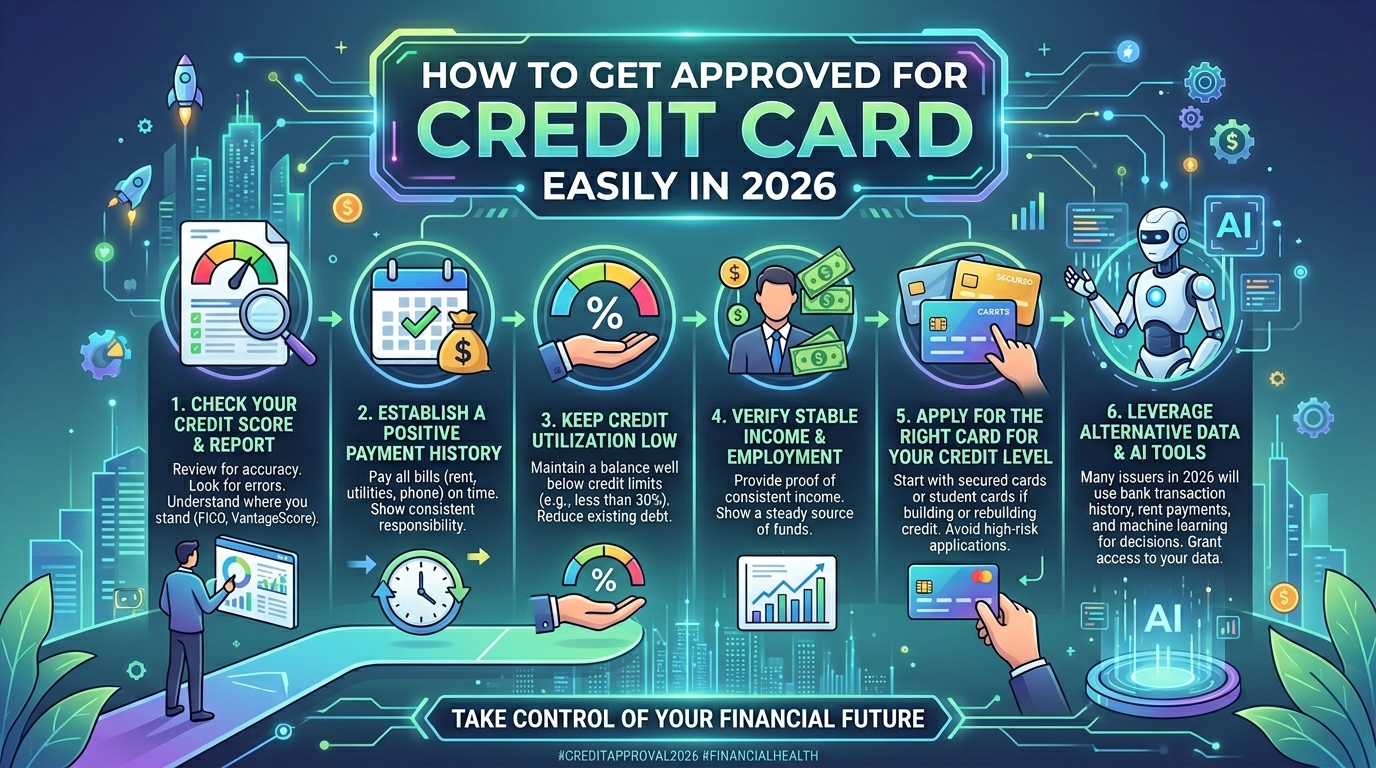
How to Get Approved for a Credit Card Easily in 2026
📖 Introduction
Getting approved for a credit card in 2026 is no longer based only on a three-digit credit score. Modern banks and financial institutions now use artificial intelligence, automated risk analysis, digital banking behavior, and real-time financial verification to evaluate applicants within seconds. This shift has changed the entire approval process for consumers across the United States and Europe.
Today, lenders examine your financial stability, debt management habits, income consistency, payment history, and overall creditworthiness before making a decision. Because competition among banks is increasing, many institutions are also offering easier approval pathways for applicants with fair or limited credit history.
Understanding how the approval system works can help you avoid rejection, improve your financial profile, and qualify for better rewards, lower interest rates, and higher credit limits. This comprehensive semantic SEO guide explains the best strategies to increase your approval chances in 2026.
Table of Contents
📊 Understand What Credit Card Companies Look For
Credit card issuers analyze multiple financial indicators before approving applications. Their goal is to determine whether an applicant can manage borrowed money responsibly and repay balances on time.
✅ Credit Score Analysis
Your credit score remains one of the strongest indicators of financial responsibility. Lenders use this score to predict repayment behavior and assess borrowing risk. Consumers with higher scores often receive faster approvals, premium rewards cards, and lower annual percentage rates.
A healthy score usually reflects:
- Consistent on-time payments
- Low credit utilization
- Long credit history
- Limited hard inquiries
- Responsible account management
Applicants with poor scores may still qualify for secured or beginner credit cards, but premium products typically require excellent credit history.
💼 Stable Income Verification
Banks need confidence that applicants can handle monthly credit obligations without financial hardship. Stable income reassures lenders that repayments are manageable.
Accepted income sources may include:
- Full-time employment
- Freelance work
- Business income
- Rental property income
- Investments and passive income
Applicants with higher and consistent income levels generally receive stronger approval opportunities and larger credit limits.
📉 Debt-to-Income Ratio Evaluation
Debt-to-income ratio measures how much of your monthly income is already committed to debt payments. This metric helps lenders determine whether you can comfortably manage additional borrowing.
Lower debt ratios indicate:
- Better financial stability
- Reduced lending risk
- Stronger repayment capability
- Improved financial flexibility
Reducing loans, credit balances, or unnecessary financial obligations before applying can significantly improve this ratio.
💳 Credit Utilization Monitoring
Credit utilization represents the percentage of available credit currently being used. Financial experts often recommend keeping utilization below 30%.
High utilization may signal:
- Financial pressure
- Excessive dependence on credit
- Increased repayment risk
Low utilization demonstrates responsible financial management and positively impacts both approval chances and credit scores.
📈 Check Your Credit Score First
Reviewing your credit score before submitting applications helps you identify realistic credit card options and avoid unnecessary rejections.
🌟 Excellent Credit Score
Consumers with excellent credit scores often qualify for:
- Travel rewards cards
- Luxury credit cards
- Premium cashback offers
- Higher credit limits
- Lower interest rates
Excellent credit reflects long-term responsible financial behavior and lender trust.
👍 Good Credit Score
Applicants with good credit scores still have strong approval chances for most mainstream cards. These consumers usually receive competitive offers and moderate rewards programs.
Maintaining good credit requires:
- Timely bill payments
- Controlled spending habits
- Responsible debt management
- Regular financial monitoring
⚠️ Fair Credit Score
Fair credit may limit access to premium cards, but many lenders still provide opportunities through:
- Starter credit cards
- Secured credit cards
- Credit-building products
Improving payment history and reducing balances can gradually strengthen approval opportunities.
🚫 Poor Credit Score
Poor credit scores often result from:
- Missed payments
- High debt levels
- Collection accounts
- Bankruptcy history
- Limited credit experience
Although approvals become more difficult, secured cards can help rebuild financial credibility over time.
💰 Pay Down Existing Debt
Reducing debt before applying for a credit card is one of the most effective strategies for improving approval chances.
📉 Lower Credit Utilization
Paying down balances immediately improves utilization ratios and strengthens credit profiles. Lenders prefer applicants who demonstrate responsible borrowing habits rather than maxed-out credit accounts.
💳 Improve Financial Stability
Lower debt obligations increase lender confidence because they indicate stronger repayment capacity and reduced financial stress.
Applicants with manageable debt levels often receive:
- Faster approvals
- Better interest rates
- Higher credit limits
- More reward opportunities
📊 Strengthen Creditworthiness
Debt reduction contributes to:
- Higher credit scores
- Improved financial flexibility
- Better long-term borrowing potential
- Reduced financial risk
Responsible debt management remains a core component of financial health in 2026.
🎯 Choose the Right Card for Your Credit Level
Applying for a suitable card significantly increases approval chances and prevents unnecessary hard inquiries.
✈️ Premium Rewards Credit Cards
These cards target consumers with:
- Excellent credit scores
- Strong income history
- Stable financial behavior
Benefits often include:
- Airline rewards
- Hotel points
- Cashback incentives
- Travel insurance
- Airport lounge access
🛒 Beginner Credit Cards
Starter cards are designed for applicants with limited credit history. These products help users establish responsible borrowing habits and build long-term financial trust.
🔒 Secured Credit Cards
Secured cards require refundable deposits that act as collateral. They are ideal for rebuilding damaged credit and establishing positive payment history.
Advantages include:
- Easier approvals
- Credit-building opportunities
- Financial discipline development
- Potential upgrades to unsecured cards
🚫 Avoid Applying for Too Many Cards at Once
Submitting several applications within a short timeframe can damage your approval odds.
📌 Hard Credit Inquiries
Each application may create a hard inquiry that temporarily lowers credit scores. Multiple inquiries can make lenders perceive financial instability.
⚠️ Increased Lending Risk
Frequent applications may suggest:
- Urgent financial problems
- Desperation for borrowing
- Poor financial planning
Banks prefer applicants who apply strategically rather than excessively.
⏳ Maintain Responsible Timing
Waiting several months between applications demonstrates financial maturity and helps maintain healthy credit standing.
💵 Increase Your Income Before Applying
Higher income strengthens applications and reassures lenders about repayment capability.
💼 Demonstrate Financial Stability
Stable earnings show lenders that monthly payments can be managed responsibly without creating financial hardship.
📈 Improve Debt-to-Income Ratios
Higher income naturally lowers debt ratios and increases borrowing flexibility.
🌍 Diversify Income Sources
Modern lenders may evaluate:
- Side businesses
- Freelance projects
- Investments
- Rental properties
- Passive income streams
Diversified income creates a stronger financial profile.
👥 Become an Authorized User
Joining a trusted person’s credit account can help establish or improve credit history.
📊 Build Positive Credit History
Authorized users may benefit from:
- Improved account age
- Positive payment records
- Better utilization ratios
This strategy can accelerate credit development for beginners.
⚠️ Choose Reliable Account Holders
Only join accounts managed responsibly because negative activity may also impact your credit profile.
🔐 Open a Secured Credit Card First
Secured cards remain one of the safest ways to rebuild credit and gain lender trust.
💵 Refundable Security Deposit
Deposits reduce lender risk and make approvals easier for applicants with poor or limited credit history.
📈 Credit Score Improvement
Consistent payments and responsible usage gradually improve credit scores and financial credibility.
🔄 Upgrade Opportunities
Many secured cards eventually transition into unsecured products after responsible long-term use.
📝 Double-Check Your Application Information
Incorrect information frequently causes automatic rejections during digital verification processes.
✅ Verify Personal Information
Ensure your:
- Name
- Address
- Employment details
- Phone number
- Financial information
match official records accurately.
💳 Report Honest Income
Providing accurate financial information improves lender trust and prevents verification problems.
📊 Improve Your Debt-to-Income Ratio
A lower debt-to-income ratio signals stronger financial management and reduced borrowing risk.
📉 Reduce Existing Obligations
Paying off loans and balances improves financial flexibility and strengthens applications.
💵 Increase Monthly Earnings
Higher income improves repayment capability and borrowing potential.
🧠 Use Pre-Approval Tools
Pre-approval systems help applicants identify realistic credit card offers without damaging credit scores.
🔍 Soft Credit Checks
Most pre-approval systems use soft inquiries that do not negatively affect credit history.
🎯 Improve Approval Accuracy
Pre-qualified offers help consumers focus on cards matching their financial profiles.
🤝 Build a Positive Banking Relationship
Maintaining strong relationships with banks can improve internal approval scores.
🏦 Active Banking History
Banks may favor customers who maintain:
- Checking accounts
- Savings accounts
- Direct deposits
- Consistent transaction history
📈 Long-Term Customer Benefits
Loyal banking customers may receive:
- Easier approvals
- Better financial offers
- Increased credit limits
- Lower interest rates
❌ Common Reasons Credit Card Applications Get Denied
Understanding rejection causes helps applicants improve future approval chances.
🚫 Low Credit Scores
Poor repayment history and excessive debt remain major rejection factors.
💳 High Existing Debt
Heavy financial obligations reduce lender confidence in repayment ability.
⚠️ Multiple Recent Applications
Frequent applications may suggest financial instability and increased lending risk.
📝 Incorrect Application Details
Even small errors can trigger automatic denial systems.
🏆 Best Strategy for Easy Approval in 2026
The best approval strategy combines strong financial habits with smart application timing.
✅ Monitor Your Credit Regularly
💰 Reduce Debt Consistently
🎯 Apply for Realistic Credit Cards
📈 Maintain Stable Income
💳 Pay Bills on Time
🏦 Build Long-Term Financial Trust
These practices significantly improve approval opportunities and long-term financial stability.
📌 Final Thoughts
Getting approved for a credit card easily in 2026 requires strategic financial planning, responsible debt management, and smart application behavior. Modern lenders evaluate far more than just credit scores. They analyze overall financial health, income consistency, banking relationships, repayment behavior, and credit utilization patterns.
Consumers in the United States and Europe who focus on improving financial discipline, maintaining low debt, monitoring credit reports, and applying for suitable cards will dramatically improve their approval chances. Strong financial habits not only increase approval success but also unlock premium benefits, better rewards, lower interest rates, and long-term financial growth.
❓ Frequently Asked Questions (FAQs)
💬 What is the easiest credit card to get approved for in 2026?
Secured credit cards and beginner credit cards are generally the easiest options for applicants with limited or poor credit history.
💬 Does applying for multiple credit cards hurt my score?
Yes. Multiple hard inquiries within a short period may temporarily reduce your credit score and lower approval chances.
💬 Can I get approved with no credit history?
Yes. Many banks offer secured cards and starter credit cards specifically designed for individuals with limited credit experience.
💬 How can I improve my credit score quickly?
You can improve your score by:
- Paying bills on time
- Lowering credit utilization
- Avoiding excessive applications
- Maintaining older accounts responsibly
💬 What income is needed for credit card approval?
There is no universal income requirement. Lenders mainly evaluate whether your income can comfortably support your financial obligations.
💬 Are secured credit cards good for rebuilding credit?
Yes. Secured cards are among the most effective tools for rebuilding damaged credit when used responsibly.
💬 How long should I wait between applications?
Most financial experts recommend waiting three to six months between applications to maintain healthy credit standing.
💬 Why do banks reject applications instantly?
Instant denials often result from:
- Low credit scores
- High debt levels
- Incorrect application information
- Multiple recent inquiries
- Insufficient income




