
Best Credit Cards for Students (No Credit History)
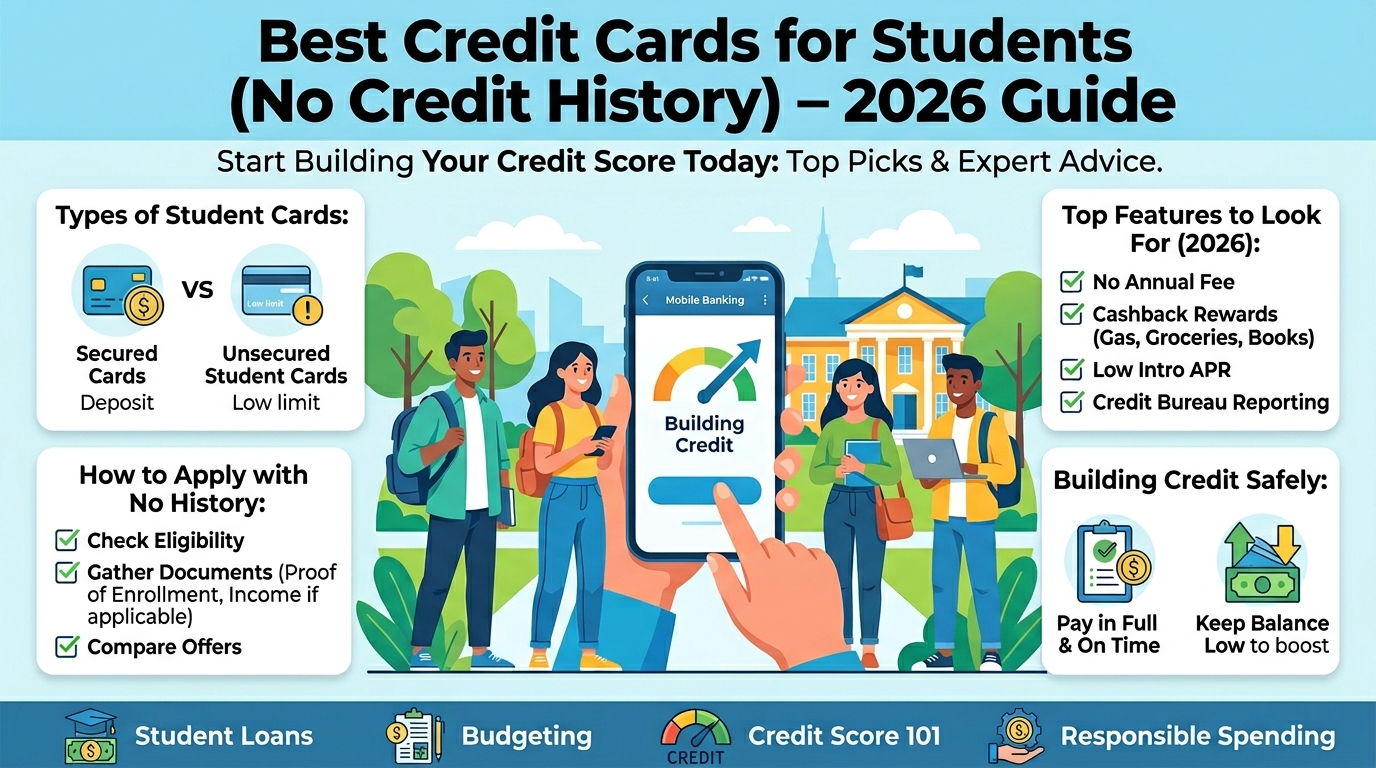
A student credit card is a beginner-level financial product designed specifically for college students, university students, and young adults with limited financial experience.
These cards are easier to qualify for compared to premium rewards cards because lenders understand that students usually have lower income levels and limited borrowing history.
Table of Contents
Student credit cards help beginners:
- ✅ Build credit scores
- ✅ Learn responsible borrowing
- ✅ Improve financial discipline
- ✅ Access emergency funds
- ✅ Earn cashback rewards
- ✅ Create positive payment history
Modern student cards also include advanced mobile banking features, spending analysis tools, digital fraud protection, and automatic payment systems.
📊 Why Building Credit Early Matters
Building credit at a young age creates long-term financial advantages. Your credit score acts as a financial reputation system that banks, landlords, lenders, and financial institutions may review before approving future applications.
🔹 Benefits of Early Credit Building
🏦 Easier Loan Approvals:
Students with strong credit history often qualify more easily for personal loans, business funding, student loan refinancing, and future financing opportunities. Responsible credit management increases lender trust over time.
🚗 Better Car Financing Opportunities:
Good credit scores may help reduce vehicle financing interest rates. Lower interest rates can save thousands of dollars throughout a car loan agreement.
🏠 Improved Apartment Rental Approvals:
Many landlords in America and Europe review credit reports before approving tenants. Strong credit profiles increase the chances of securing rental properties in competitive housing markets.
📱 Easier Mobile Phone Contracts:
Telecommunication companies often review financial reliability before approving installment-based smartphone contracts. Better credit history may provide access to improved financing terms.
💳 Access to Premium Rewards Cards:
Students who build strong credit early may later qualify for travel cards, airport lounge access, higher cashback percentages, and luxury rewards programs.
💰 Stronger Long-Term Financial Reputation:
Credit history becomes part of your overall financial identity. Positive financial behavior builds long-term trust with banks and financial institutions.
Building credit early gives students a major financial advantage before entering full-time professional life.
🔥 Best Types of Credit Cards for Students With No Credit History
Different student credit cards serve different financial goals. Choosing the right category is extremely important for maximizing approval chances and building healthy financial habits.
💳 Student Cashback Credit Cards
Student cashback cards are extremely popular among beginners because they reward users for regular spending while helping build positive credit history.
🔹 Benefits of Student Cashback Cards
💵 Earn Cashback on Everyday Purchases:
Students can earn cashback rewards on groceries, transportation, restaurants, online shopping, streaming subscriptions, and daily purchases. Small rewards may create meaningful yearly savings over time.
📱 Beginner-Friendly Mobile Banking:
Most student cashback cards include modern banking apps that provide spending alerts, budgeting tools, fraud notifications, balance tracking, and payment reminders.
📈 Helps Build Positive Credit History:
Responsible usage combined with on-time payments helps strengthen credit scores and improves future approval opportunities.
🛡️ Digital Fraud Protection:
Modern student cards now include biometric login systems, purchase verification alerts, secure online transactions, and card-freezing features for better security.
🌍 Ideal for Daily Student Spending:
Cashback student cards are best for students who regularly make smaller purchases and can repay balances responsibly each month.
Student cashback cards combine financial rewards with credit-building opportunities, making them one of the most balanced beginner options available in 2026.
🔒 Secured Student Credit Cards
Secured credit cards are among the easiest approval options for students with absolutely no credit history or limited financial background.
These cards require refundable security deposits that reduce financial risk for lenders.
🔹 Benefits of Secured Student Credit Cards
🛡️ Extremely High Approval Chances:
Because the deposit protects the lender, approval requirements are usually much easier than traditional credit cards. Many students rejected for standard cards still qualify successfully for secured cards.
📊 Helps Build Credit Scores Faster:
Secured cards report payment activity to major credit bureaus, helping students establish positive financial history through responsible repayment behavior.
💰 Refundable Security Deposits:
The deposit is typically refundable if the account remains in good standing or transitions into an unsecured card later.
📉 Encourages Responsible Spending:
Lower credit limits help reduce overspending risks while teaching students healthy financial discipline.
🔄 Easy Upgrade Opportunities:
Many secured card users later transition into unsecured credit cards after building stronger financial profiles.
Secured cards remain one of the safest and smartest starting points for complete beginners entering the credit system.
💵 Low-Interest Student Credit Cards
Low-interest student cards are designed for beginners who may occasionally carry balances between payment cycles.
🔹 Benefits of Low-Interest Student Credit Cards
💸 Lower APR Rates:
Reduced interest rates help minimize long-term borrowing costs compared to higher-interest beginner cards.
🚨 Better Emergency Financial Flexibility:
Unexpected expenses sometimes force students to carry balances temporarily. Lower APR rates help make repayment more manageable.
📈 Reduces Financial Stress:
Lower borrowing costs provide greater financial flexibility during periods of economic pressure.
🛡️ Safer for First-Time Borrowers:
Students still learning budgeting skills may benefit from lower interest penalties if they occasionally cannot repay balances fully.
💳 Builds Responsible Borrowing Habits:
Lower interest structures encourage healthier repayment behavior and long-term financial stability.
Low-interest cards are ideal for students prioritizing safer borrowing and financial control.
🎁 Rewards Student Credit Cards
Rewards student cards provide cashback, points, travel perks, entertainment bonuses, and shopping discounts for responsible users.
🔹 Benefits of Rewards Student Cards
🎯 Earn Points Through Everyday Spending:
Students accumulate rewards through regular spending categories including food delivery, entertainment, shopping, transportation, and subscriptions.
✈️ Travel Benefits and International Features:
Some reward cards provide airline perks, travel protections, hotel discounts, and reduced foreign transaction fees.
🎬 Entertainment and Subscription Bonuses:
Modern student cards frequently include streaming platform rewards, gaming offers, and digital subscription discounts.
📊 Encourages Spending Awareness:
Reward tracking often increases budgeting awareness because students become more engaged with spending behavior.
💡 Long-Term Financial Value:
Responsible usage of rewards systems may create significant long-term financial advantages for disciplined users.
Rewards cards work best for students who already understand budgeting fundamentals and repayment discipline.
🏦 Features to Look for in a Student Credit Card
Selecting the best student credit card requires careful comparison of fees, approval requirements, rewards systems, and security features.
🔹 Low or No Annual Fees
💰 Keeps Student Costs Lower:
Most students operate on limited budgets, making high yearly fees unnecessary financial pressure.
📉 Improves Long-Term Affordability:
No-fee cards help students maintain accounts longer, which may strengthen credit history age.
💳 Better for Beginner Financial Stability:
Removing annual costs allows students to focus on responsible repayment behavior instead of maintenance expenses.
🔹 Easy Approval Requirements
📋 Designed for First-Time Applicants:
Student-focused cards are created specifically for beginners with little financial history.
💼 Accepts Part-Time Income Sources:
Many student cards accept freelance income, part-time employment, scholarships, and side-income documentation.
🌍 Better Accessibility for International Students:
Simplified approval systems improve accessibility for younger applicants and international students.
🔹 Cashback or Rewards Features
🛍️ Provides Everyday Savings:
Rewards systems help reduce the effective cost of normal spending categories.
🎯 Encourages Smarter Spending Habits:
Reward structures often motivate more organized budgeting and spending decisions.
💵 Creates Long-Term Financial Value:
Small cashback percentages may become meaningful savings over time for disciplined users.
🔹 Credit Score Reporting
📊 Helps Build Financial Reputation:
Reporting activity to credit bureaus strengthens long-term credit history development.
🏦 Improves Future Approval Chances:
Positive reporting increases future eligibility for mortgages, loans, and premium financial products.
📈 Strengthens Financial Trustworthiness:
Responsible repayment behavior improves lender confidence significantly.
🔹 Mobile Banking Features
📱 Real-Time Spending Notifications:
Modern banking apps allow instant transaction monitoring and financial tracking.
🔔 Automatic Payment Alerts:
Payment reminders reduce missed due dates and accidental penalties.
🛡️ Advanced Security Systems:
Modern banking apps include biometric login systems, fraud detection, digital card freezing, and suspicious activity monitoring.
Digital banking technology has become essential for student financial management in 2026.
📈 How Students Can Get Approved Easily in 2026
Getting approved for a student credit card depends on financial preparation, responsible banking behavior, and strategic applications.
💼 Show Stable Income
💵 Even Small Income Sources Matter:
Part-time jobs, freelancing, remote work, online income, and scholarships may all strengthen approval chances.
📋 Consistency Is Extremely Important:
Banks prefer stable financial activity rather than unpredictable income behavior.
🏦 Demonstrates Repayment Ability:
Income shows lenders that students can manage monthly obligations responsibly.
📉 Avoid Too Many Applications
⚠️ Multiple Hard Inquiries Can Hurt Scores:
Frequent applications may temporarily reduce credit scores and lower approval chances.
🧠 Strategic Applications Work Better:
Applying only for beginner-friendly cards improves success rates significantly.
⏳ Patience Improves Financial Profiles:
Spacing out applications allows financial history to stabilize naturally.
📊 Keep Banking Activity Healthy
💰 Maintain Positive Account Balances:
Healthy checking and savings accounts improve lender confidence.
📱 Avoid Frequent Overdrafts:
Overdraft history may signal poor financial management behavior.
📈 Demonstrate Stable Financial Activity:
Responsible spending and savings habits strengthen approval opportunities.
🔒 Consider Starting With a Secured Card
🛡️ Easier Entry Into the Credit System:
Secured cards remain one of the simplest ways to establish financial history safely.
📊 Builds Long-Term Credit Profiles:
Responsible secured card usage improves future approval opportunities significantly.
🔄 Many Secured Cards Offer Upgrades:
Some secured cards later convert into traditional unsecured cards after responsible usage.
🚫 Common Mistakes Students Should Avoid
Student credit mistakes can negatively impact financial health for years, making responsible usage extremely important.
❌ Missing Payments
⏰ Damages Credit Scores Quickly:
Late payments remain on credit reports for years and reduce lender trust significantly.
💸 Creates Extra Fees and Interest:
Missed payments may trigger financial penalties and higher borrowing costs.
🏦 Hurts Future Financial Opportunities:
Negative payment history can affect future loan approvals and apartment applications.
❌ Maxing Out Credit Cards
📉 High Utilization Hurts Credit Health:
Using most available credit lowers financial credibility and negatively affects scores.
⚠️ Signals Financial Stress:
Banks may interpret high utilization as risky financial behavior.
💳 Lower Balances Are Safer:
Experts usually recommend keeping utilization below 30%.
📊 Credit Utilization Formula:
\text{Credit Utilization} = \frac{\text{Current Balance}}{\text{Total Credit Limit}} \times 100
Maintaining low utilization is one of the most effective ways to improve credit scores gradually.
❌ Applying for Premium Cards Too Early
🏦 Premium Cards Require Strong Financial Profiles:
Luxury rewards cards usually demand established credit history and higher income.
📋 Beginner Cards Offer Better Approval Chances:
Starting with easier products helps students build financial stability safely.
📈 Stronger Future Eligibility:
Responsible beginner card usage improves access to better cards later.
❌ Spending More Than You Can Repay
🚨 Debt Can Grow Very Quickly:
Interest accumulation becomes dangerous if balances remain unpaid for long periods.
📊 Smart Budgeting Is Essential:
Students should treat credit cards as financial tools instead of free spending money.
💡 Responsible Spending Builds Financial Freedom:
Healthy spending habits improve long-term financial stability and creditworthiness.
💡 Smart Tips to Build Credit Fast as a Student
Students can improve credit scores faster by following consistent financial habits and responsible repayment behavior.
✅ Pay Bills on Time Every Month
📅 Payment History Is Extremely Important:
On-time payments are one of the largest factors influencing credit scores.
🏦 Builds Long-Term Financial Trust:
Banks prefer borrowers with reliable repayment behavior.
📈 Improves Future Approval Opportunities:
Positive payment history increases eligibility for future financial products.
✅ Keep Balances Low
📉 Low Utilization Improves Scores:
Smaller balances demonstrate responsible borrowing behavior.
💳 Helps Avoid Financial Stress:
Lower balances are easier to repay and reduce interest risks.
📊 Recommended Credit Utilization Formula:
\text{Credit Utilization} = \frac{\text{Current Balance}}{\text{Total Credit Limit}} \times 100
Keeping utilization below 30% is generally recommended for healthier credit score growth.
✅ Use Your Card Regularly
🛍️ Small Purchases Build History:
Regular transactions help create positive financial activity patterns.
📈 Demonstrates Active Account Management:
Consistent usage improves financial credibility over time.
💡 Responsible Usage Is More Important Than Spending Large Amounts:
Students can build credit successfully without overspending.
✅ Enable Automatic Payments
🔔 Prevents Missed Due Dates:
Automatic systems reduce accidental late payments significantly.
📱 Simplifies Financial Management:
Automation improves payment consistency and organization.
🏦 Strengthens Credit Health:
Consistent repayment behavior improves lender confidence.
✅ Monitor Your Credit Score
📊 Tracks Financial Improvement:
Regular monitoring helps students understand credit growth patterns.
⚠️ Detects Fraud or Reporting Errors Early:
Students can identify problems before major financial damage occurs.
💡 Encourages Better Financial Decisions:
Awareness improves budgeting behavior and spending control.
🌍 Are Student Credit Cards Safe?
Yes. Student credit cards issued by legitimate financial institutions are highly secure and protected by advanced fraud prevention systems, banking regulations, and digital security technologies.
🔹 Important Credit Card Safety Tips
🛡️ Protect Card Information Carefully:
Students should never share card numbers, passwords, or security codes publicly.
📱 Monitor Banking Activity Regularly:
Frequent account monitoring helps detect suspicious transactions quickly.
🔔 Enable Security Notifications:
Fraud alerts and spending notifications improve financial protection.
💻 Use Secure Payment Platforms:
Avoid unsafe websites and unsecured public Wi-Fi when making online purchases.
🚨 Report Suspicious Transactions Immediately:
Fast reporting improves fraud protection and reduces financial losses.
Responsible usage and strong digital security habits are essential for safe financial management.
✅ Final Thoughts
Student credit cards in 2026 are more accessible, secure, and beginner-friendly than ever before. Even students with no credit history can now qualify for starter cards designed specifically for first-time users entering the modern banking system.
The best student credit cards are not simply those offering the biggest rewards. The ideal beginner card should provide easy approval requirements, strong fraud protection, low fees, mobile banking tools, manageable credit limits, and long-term credit-building opportunities.
Students who develop responsible financial habits early often enjoy stronger credit scores, lower future borrowing costs, better financial flexibility, and improved access to future financial opportunities.
Most importantly, students should always remember that credit cards are financial tools meant to build financial freedom — not create long-term debt problems.
❓ Frequently Asked Questions (FAQs)
💬 Can students get approved for credit cards with no credit history?
Yes. Many banks now offer student credit cards designed specifically for applicants with no previous credit history.
💬 What is the easiest student credit card to get approved for?
Secured student credit cards are usually the easiest because refundable deposits reduce lender risk.
💬 Do student credit cards help improve credit scores?
Yes. Responsible usage and on-time payments help build positive credit history gradually.
💬 What credit limit do most student credit cards offer?
Most beginner student cards provide lower limits ranging from several hundred dollars to approximately $1,500 depending on approval factors.
💬 Can international students apply for credit cards?
Some financial institutions allow international students to apply if they provide identification, enrollment proof, and valid income documentation.
💬 Is using a student credit card frequently harmful?
No. Regular usage is healthy if balances remain low and payments are made responsibly.
💬 Should students choose secured or unsecured cards first?
Students with no income or weak approval chances may benefit more from secured cards initially.
💬 Can student credit cards earn cashback rewards?
Yes. Many modern student cards now provide cashback rewards, shopping discounts, dining benefits, and entertainment offers.
💬 How fast can students build good credit scores?
With responsible repayment behavior and low utilization, noticeable improvement may occur within several months.
💬 What happens if a student misses credit card payments?
Missed payments may lower credit scores, increase fees, raise interest rates, and reduce future approval opportunities for loans and financial products.


