


Debit Card vs Credit Card
Debit Card vs Credit Card – Key Differences
The global banking industry has evolved rapidly in 2026. Across the United States and Europe, consumers now rely heavily on digital payment methods for shopping, subscriptions, travel bookings, online services, and contactless retail purchases. Debit cards and credit cards have become two of the most commonly used financial tools in modern banking systems.
Although both payment cards appear similar physically, they function in completely different ways financially. Many people mistakenly assume debit cards and credit cards offer the same features simply because both can be used online and in physical stores. However, their impact on budgeting, financial discipline, credit scores, security, fraud protection, borrowing behavior, and long-term financial stability is dramatically different.
Understanding the difference between debit cards and credit cards is extremely important for making smarter financial decisions. Choosing the correct payment method may improve budgeting habits, reduce debt risks, increase fraud protection, and create stronger long-term financial opportunities.
Modern banking technology has also introduced AI-powered fraud monitoring, virtual payment cards, mobile wallet integration, instant transaction alerts, biometric authentication systems, and advanced digital budgeting tools. As digital banking ecosystems continue expanding, understanding payment card systems has become more important than ever before.
This semantic SEO optimized guide explains everything consumers need to know about debit cards and credit cards including how they work, their advantages, disadvantages, security systems, rewards programs, interest structures, online shopping safety, and which option may fit different financial lifestyles best.
Table of Contents
💳 What Is a Debit Card?
A debit card is a payment card directly connected to a personal checking account or savings account. Whenever a transaction is completed using a debit card, the money is automatically deducted from the user’s available bank balance.
Unlike credit cards, debit cards do not involve borrowing money from financial institutions. Consumers are spending their own funds rather than temporarily using borrowed credit.
Debit cards are commonly used for ATM withdrawals, online transactions, bill payments, grocery shopping, retail purchases, subscriptions, and digital wallet payments.

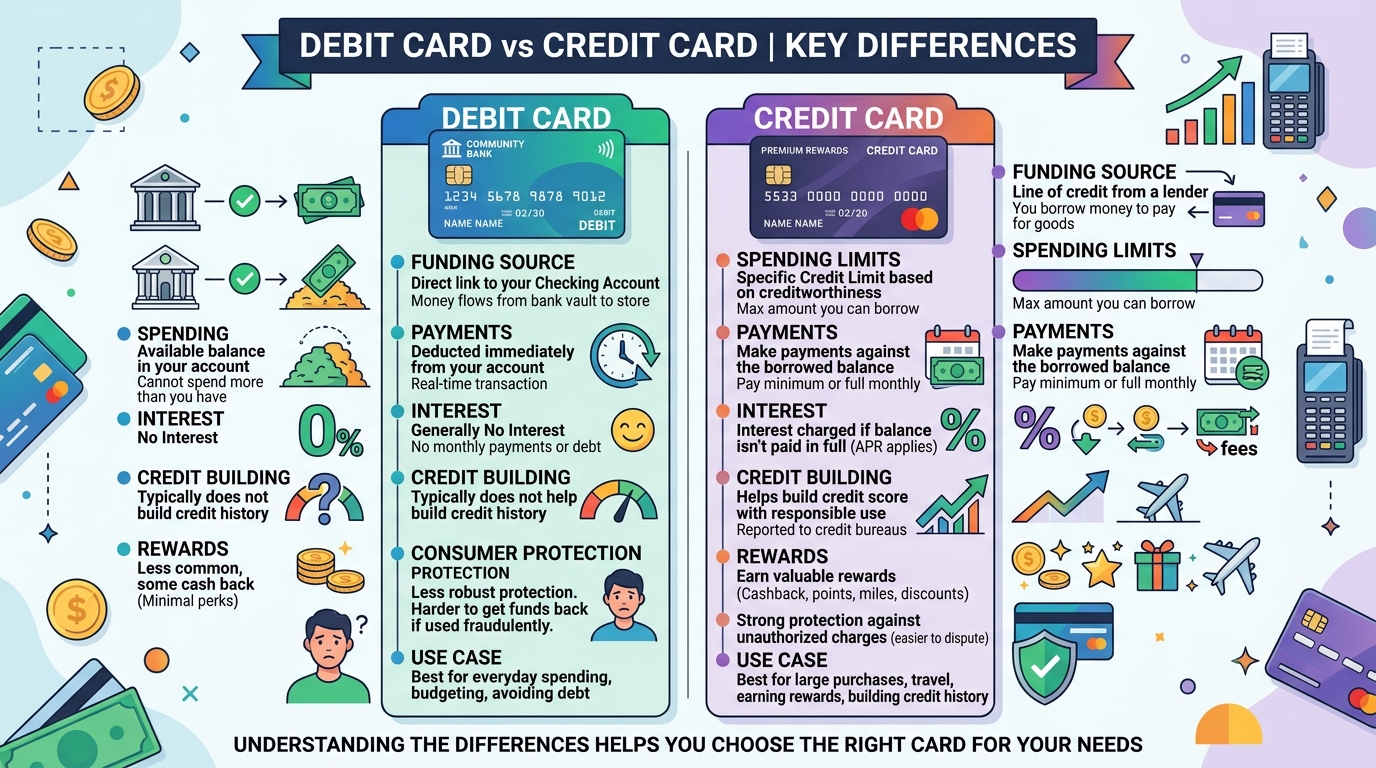
🔹 Key Features of Debit Cards
🏦 Direct Access to Personal Bank Funds:
Debit cards provide direct access to money already available inside a bank account. This feature helps users avoid debt accumulation because purchases are limited to existing balances. Many financial experts recommend debit cards for consumers who want stronger spending discipline and improved budgeting habits. Since transactions reduce balances instantly, users become more aware of their spending behavior. Debit cards are commonly preferred by students, beginners, families, and individuals trying to avoid long-term borrowing risks. Because users are not borrowing money, there are generally no interest charges associated with normal debit card purchases. This creates a simpler and safer financial experience for many consumers focused on maintaining financial stability.
💸 Convenient ATM Access:
One of the biggest advantages of debit cards is convenient access to physical cash through ATM systems worldwide. Consumers can withdraw money instantly whenever needed for transportation, emergencies, local purchases, or travel expenses. Many banks now provide international ATM access through global banking partnerships, improving travel convenience across Europe and America. Some modern digital banks also reimburse ATM fees or provide fee-free withdrawal networks. Easy access to cash remains an important feature even as digital payments continue dominating modern commerce.
📉 Helps Reduce Overspending:
Debit cards naturally encourage spending discipline because users cannot easily spend beyond available account balances. This helps reduce impulsive financial behavior and minimizes debt risks associated with excessive borrowing. Financial advisors often recommend debit cards for individuals trying to maintain strict budgets or recover from debt problems. Spending limitations create healthier long-term financial habits while reducing financial stress caused by interest charges and repayment obligations.
📱 Integration With Mobile Banking:
Modern debit cards integrate seamlessly with mobile banking applications. Consumers can monitor balances in real time, freeze cards instantly, activate fraud alerts, review spending history, and manage transactions directly from smartphones. AI-powered budgeting tools now provide detailed spending analysis, subscription tracking, savings recommendations, and suspicious activity notifications. Real-time banking technology has significantly improved financial transparency and user control.
🛡️ Safer Than Carrying Physical Cash:
Debit cards reduce the need to carry large amounts of physical cash, improving both convenience and personal safety. Lost or stolen cash is usually unrecoverable, while debit cards can often be frozen instantly through banking apps. Contactless payments, biometric authentication systems, and fraud monitoring technologies further improve modern debit card security.
Debit cards are generally ideal for budgeting, daily spending management, and maintaining stronger financial discipline.
💳 What Is a Credit Card?
A credit card is a financial payment tool that allows consumers to borrow money temporarily from banks or financial institutions. Instead of using personal bank account funds directly, the lender pays merchants on behalf of the consumer, and the borrowed balance must later be repaid according to billing cycles and repayment terms.
If balances remain unpaid after due dates, interest charges may apply.
Credit cards are widely used for online shopping, travel bookings, subscriptions, emergency spending, business purchases, and building financial history.
🔹 Key Features of Credit Cards
💰 Temporary Borrowing Power:
Credit cards provide temporary access to borrowed funds up to an approved credit limit established by the lender. This allows consumers to make purchases even during temporary cash shortages or unexpected emergencies. Borrowing flexibility can be extremely valuable for travel expenses, medical emergencies, urgent repairs, and online transactions. However, responsible repayment behavior is critical because unpaid balances may accumulate high interest charges over time.
📈 Helps Build Credit Scores:
One of the biggest advantages of credit cards is their ability to build positive credit history. Responsible usage, on-time payments, low balances, and healthy account management contribute to stronger credit scores. Higher credit scores may improve future approval chances for mortgages, car financing, apartment rentals, business loans, and premium financial products. Credit cards are often considered essential tools for establishing long-term financial credibility.
🎁 Cashback and Rewards Systems:
Modern credit cards frequently include cashback rewards, airline miles, hotel benefits, entertainment discounts, dining rewards, shopping protections, and travel insurance systems. Some premium cards even provide airport lounge access and luxury travel perks. Consumers who repay balances fully each month may benefit significantly from these rewards systems without paying interest charges.
🚨 Emergency Financial Flexibility:
Credit cards provide financial flexibility during emergencies when immediate access to extra funds becomes necessary. Many financially responsible consumers maintain active credit cards specifically for emergency preparedness and unexpected expenses.
🛡️ Strong Fraud Protection:
Credit cards usually provide stronger fraud protection systems than debit cards. Many providers include transaction dispute systems, chargeback rights, virtual payment cards, suspicious activity monitoring, and fraud investigation support. Because online purchases use borrowed funds instead of direct bank balances, many consumers prefer credit cards for digital transactions.
Credit cards can become powerful financial tools when managed responsibly, but careless borrowing behavior may create serious long-term debt problems.
⚖️ Debit Card vs Credit Card – Main Differences
Although debit cards and credit cards appear similar physically, they function very differently financially.
💰 Source of Money
🔹 Debit Card
🏦 Uses Existing Bank Account Funds:
Debit cards use personal money already stored inside checking or savings accounts. Transactions immediately reduce available balances after purchases are processed. This system creates stronger budgeting discipline and helps users maintain controlled spending behavior.
📉 Lower Debt Risks:
Since users spend their own money, debit cards reduce borrowing-related risks and help prevent excessive debt accumulation.
🔹 Credit Card
💳 Uses Borrowed Funds:
Credit cards provide temporary borrowed money from financial institutions that must later be repaid according to billing cycles.
📈 Greater Purchasing Flexibility:
Credit cards allow purchases even when immediate cash availability is limited, providing greater financial flexibility during emergencies or large purchases.
📊 Impact on Credit Score
Credit score impact represents one of the biggest differences between debit cards and credit cards.
🔹 Debit Cards and Credit Scores
📉 Usually Do Not Build Credit:
Most debit card transactions are not reported to credit bureaus because they do not involve borrowing systems.
💳 Better for Spending Discipline:
Debit cards help consumers avoid debt-related financial problems through controlled spending behavior.
🔹 Credit Cards and Credit Scores
📈 Builds Positive Financial Reputation:
Responsible credit card usage improves credit history and strengthens financial credibility over time.
📉 High Balances Can Reduce Scores:
Excessive credit utilization may negatively affect credit scores and lender confidence.
📊 Credit Utilization Formula:
\text{Credit Utilization} = \frac{\text{Current Balance}}{\text{Total Credit Limit}} \times 100
Financial experts usually recommend maintaining utilization below 30% for healthier credit score growth.
🛡️ Security and Fraud Protection
Cybersecurity has become increasingly important as digital banking systems continue expanding globally.
🔒 Debit Card Security
🏦 Direct Bank Account Exposure:
Because debit cards connect directly to bank balances, fraud may temporarily affect access to personal funds.
📱 Real-Time Alerts Improve Security:
Modern banking apps provide suspicious activity monitoring, biometric login systems, instant notifications, and card-freezing features.
💻 Safe Online Behavior Is Important:
Consumers should avoid unsafe websites and unsecured public Wi-Fi when entering banking information online.
🔒 Credit Card Security
🛡️ Stronger Fraud Protection Systems:
Credit card providers often include advanced transaction dispute rights and fraud investigation support.
🚨 Better Chargeback Protection:
Unauthorized purchases may be disputed more easily using credit cards.
💳 Safer for Online Shopping:
Many experts recommend credit cards for digital purchases because they reduce direct exposure of personal bank accounts.
🎁 Rewards and Cashback Features
Rewards systems differ significantly between debit cards and credit cards.
💵 Debit Card Rewards
🎯 Smaller Cashback Opportunities:
Some banks offer cashback debit cards, but rewards are generally smaller than credit card programs.
📉 Limited Travel Perks:
Debit cards rarely provide airline miles or luxury travel rewards.
🎁 Credit Card Rewards
✈️ Travel Benefits and Airline Miles:
Many credit cards include hotel points, airport lounge access, and travel insurance.
💰 Cashback on Daily Purchases:
Consumers may earn rewards on groceries, restaurants, fuel, streaming services, and entertainment spending.
🛍️ Shopping Protections:
Some cards include extended warranties and purchase protection systems.
💸 Interest Rates and Fees
Understanding card-related fees is extremely important for financial planning.
📉 Debit Card Fees
💳 Usually No Interest Charges:
Debit cards generally do not involve interest because consumers use personal funds.
⚠️ Possible ATM or Overdraft Fees:
Some banks may charge ATM usage fees or overdraft penalties.
📈 Credit Card Fees
💸 Interest Charges Can Become Expensive:
Unpaid balances may accumulate significant interest costs over time.
⚠️ Late Payment Penalties:
Missing due dates may trigger fees and credit score damage.
💳 Annual Fees on Premium Cards:
Luxury rewards cards may include yearly membership costs.
🌍 Which Card Is Better for Online Shopping?
Both cards support online purchases, but credit cards often provide stronger consumer protections.
🔹 Why Credit Cards Are Better for Online Shopping
🛡️ Stronger Fraud Protections:
Credit cards usually include chargeback systems and transaction dispute rights.
💳 Reduced Direct Account Exposure:
Digital transactions rely on borrowed funds instead of direct bank balances.
🔹 Why Some Consumers Prefer Debit Cards Online
📉 Better Budget Control:
Debit cards help prevent excessive online spending.
💰 Avoids Borrowing Risks:
Consumers avoid interest charges and debt accumulation.
📱 Contactless Payments and Digital Wallets
Modern payment ecosystems fully support both debit cards and credit cards.
🔹 Popular Features Include
📲 Apple Pay and Google Pay Integration
⌚ Smartwatch Payments
🔔 Instant Transaction Notifications
📊 AI Spending Analysis Tools
🛡️ Biometric Authentication Systems
Digital banking technology continues evolving rapidly across global financial markets.
🚫 Common Mistakes People Make
Many consumers experience financial problems because they misunderstand payment card systems.
❌ Treating Credit Cards Like Free Money
🚨 Debt Can Accumulate Quickly:
High interest charges may create serious long-term financial stress.
📉 Overspending Damages Financial Stability:
Irresponsible borrowing may negatively affect credit scores and future loan approvals.
❌ Ignoring Debit Card Balances
⚠️ Overdraft Fees May Occur:
Spending beyond account balances may trigger penalties.
📱 Transaction Monitoring Is Important:
Consumers should review account activity regularly for fraud detection and budgeting purposes.
❌ Ignoring Cybersecurity Practices
🛡️ Digital Fraud Risks Continue Growing:
Cybercrime targeting online banking systems continues increasing globally.
💻 Safe Online Behavior Matters:
Consumers should use strong passwords, enable fraud alerts, and avoid suspicious websites.
✅ Final Thoughts
Understanding the difference between debit cards and credit cards is essential for smarter financial management in 2026.
Debit cards are generally better for budgeting, controlled spending, and avoiding debt because they use personal bank account funds directly. Credit cards provide borrowing flexibility, stronger rewards systems, enhanced fraud protection, online shopping security, travel benefits, and opportunities to build long-term credit history.
Neither payment method is universally better for every situation. The best option depends on individual financial goals, spending habits, income stability, security preferences, and long-term financial planning strategies.
Many financially responsible consumers combine both systems strategically by using debit cards for budgeting and credit cards for rewards, online purchases, travel bookings, and credit-building purposes.
Most importantly, both debit cards and credit cards should be used responsibly to maintain healthy financial stability and long-term financial success.
❓ Frequently Asked Questions (FAQs)
💬 What is the main difference between debit cards and credit cards?
Debit cards use personal bank account funds directly, while credit cards provide temporary borrowed money from lenders.
💬 Can debit cards improve credit scores?
Most debit cards do not build credit because transactions usually are not reported to credit bureaus.
💬 Are credit cards safer for online shopping?
Yes. Credit cards often provide stronger fraud protection systems and transaction dispute rights.
💬 Do credit cards charge interest?
Yes. Interest may apply if balances are not repaid fully before billing deadlines.
💬 Can debit cards have fees?
Yes. Some banks charge ATM usage fees, overdraft penalties, or international transaction fees.
💬 Which card is better for budgeting?
Debit cards are generally better for budgeting because spending is limited to available account balances.
💬 Can credit cards help build financial history?
Yes. Responsible credit card usage and on-time payments improve credit scores over time.
💬 Are cashback rewards better on credit cards?
Credit cards usually provide stronger cashback rewards and travel benefits compared to debit cards.
💬 Should beginners start with debit cards first?
Many beginners start with debit cards for spending discipline before gradually using beginner-friendly credit cards.
💬 Is it smart to use both debit cards and credit cards together?
Yes. Many financially responsible consumers combine both systems strategically for budgeting, rewards, online security, and long-term financial growth.




